
Public and commercial buildings
In a school, a hospital or an office the building usually cannot close. So what counts here is not only how the floor looks and how long it lasts, but also what the installation means for the people in the building: odour, dust and the time a room is out of use.
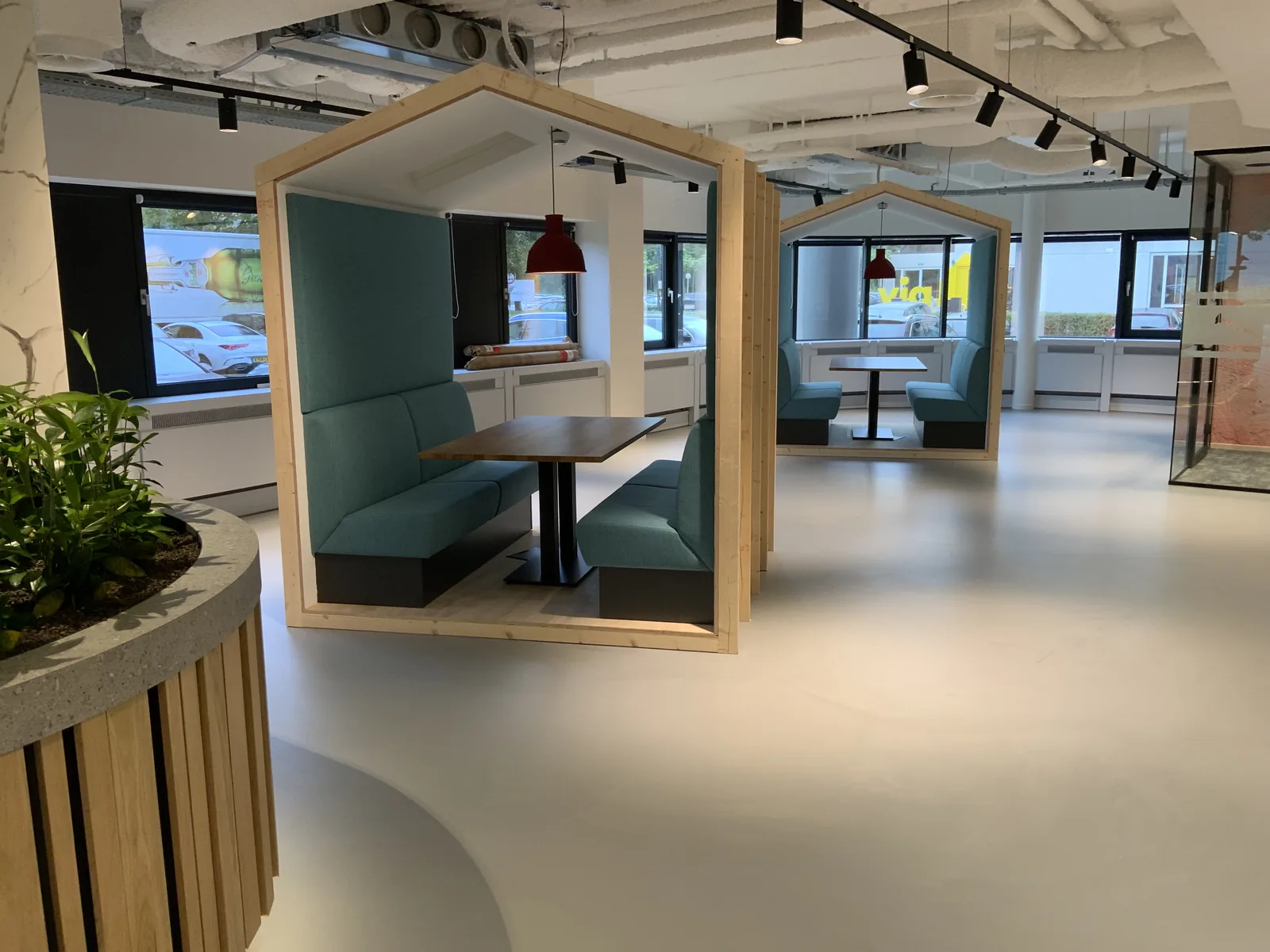
In a building that stays in use, odour is a real concern. On a nursing ward or in a school a system that releases solvent odour for hours is not acceptable, however good the floor. Low-odour systems largely remove that problem, so we ask beforehand whether the adjoining rooms stay in use and choose the system accordingly. Preparation work, which produces most of the dust and noise, is planned outside lesson, consultation or office hours.
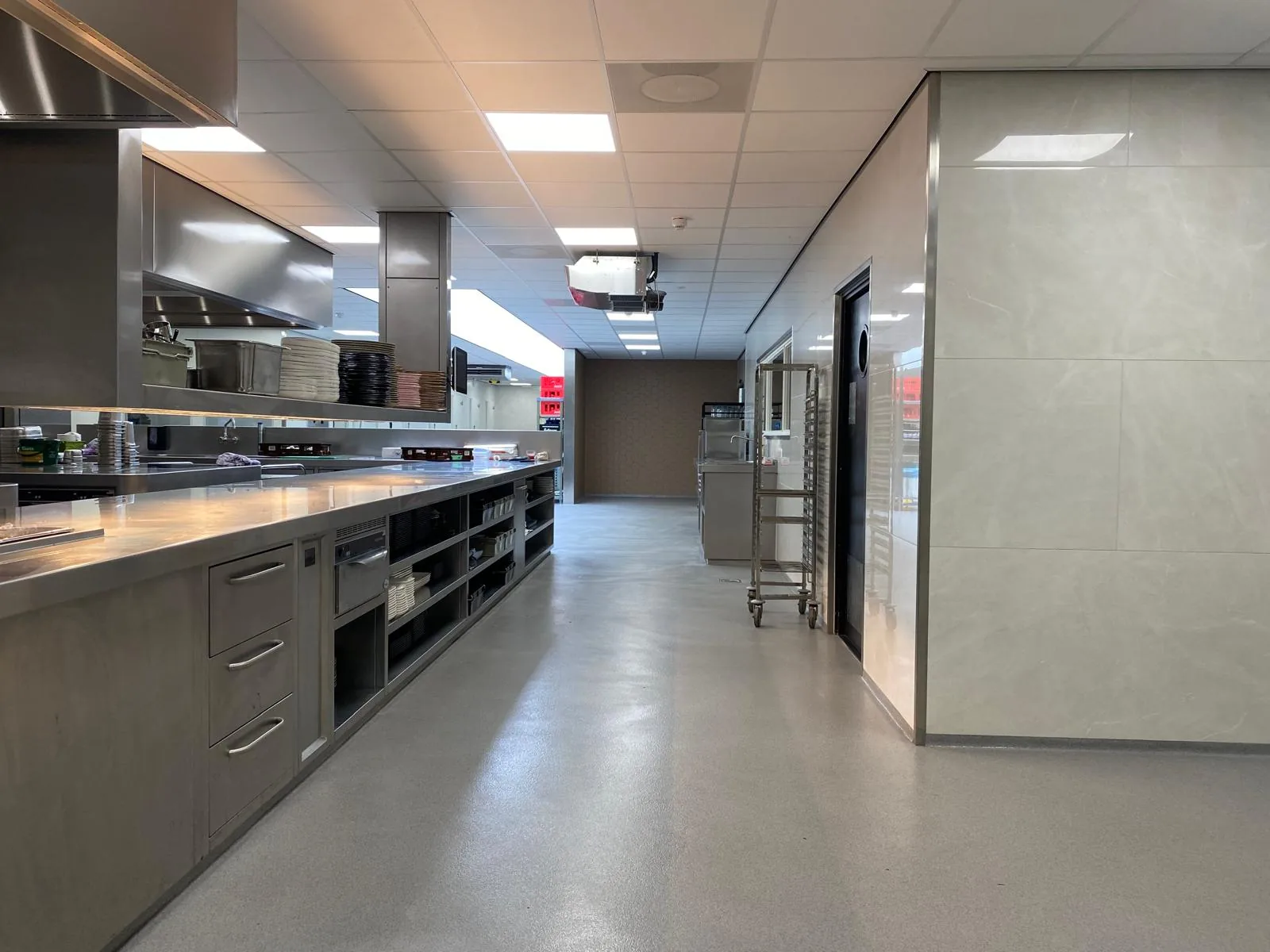
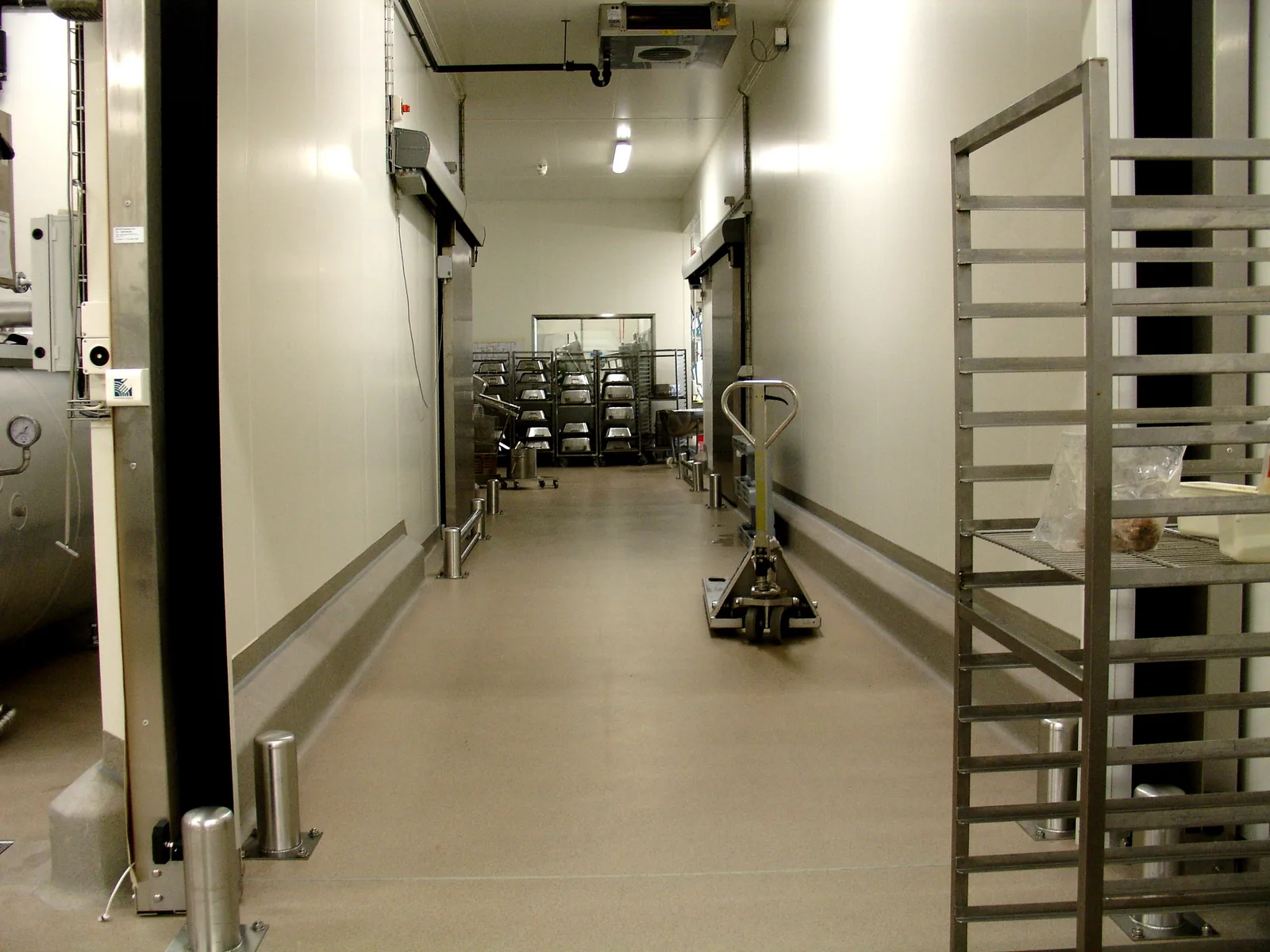
In offices, schools and care facilities the floor also determines how a room sounds and feels. An elastic intermediate layer makes a floor quieter underfoot and more comfortable to stand on for long periods; where impact sound between storeys matters it is a requirement, not a luxury. In changing rooms, sanitary areas and around pools the finish must be slip resistant for bare feet, resistant to chlorine and disinfectants and fully seamless, with falls to the gully and a coved skirting. In care settings the floor must withstand daily disinfection and the wheelchairs, beds and equipment that pass over it.
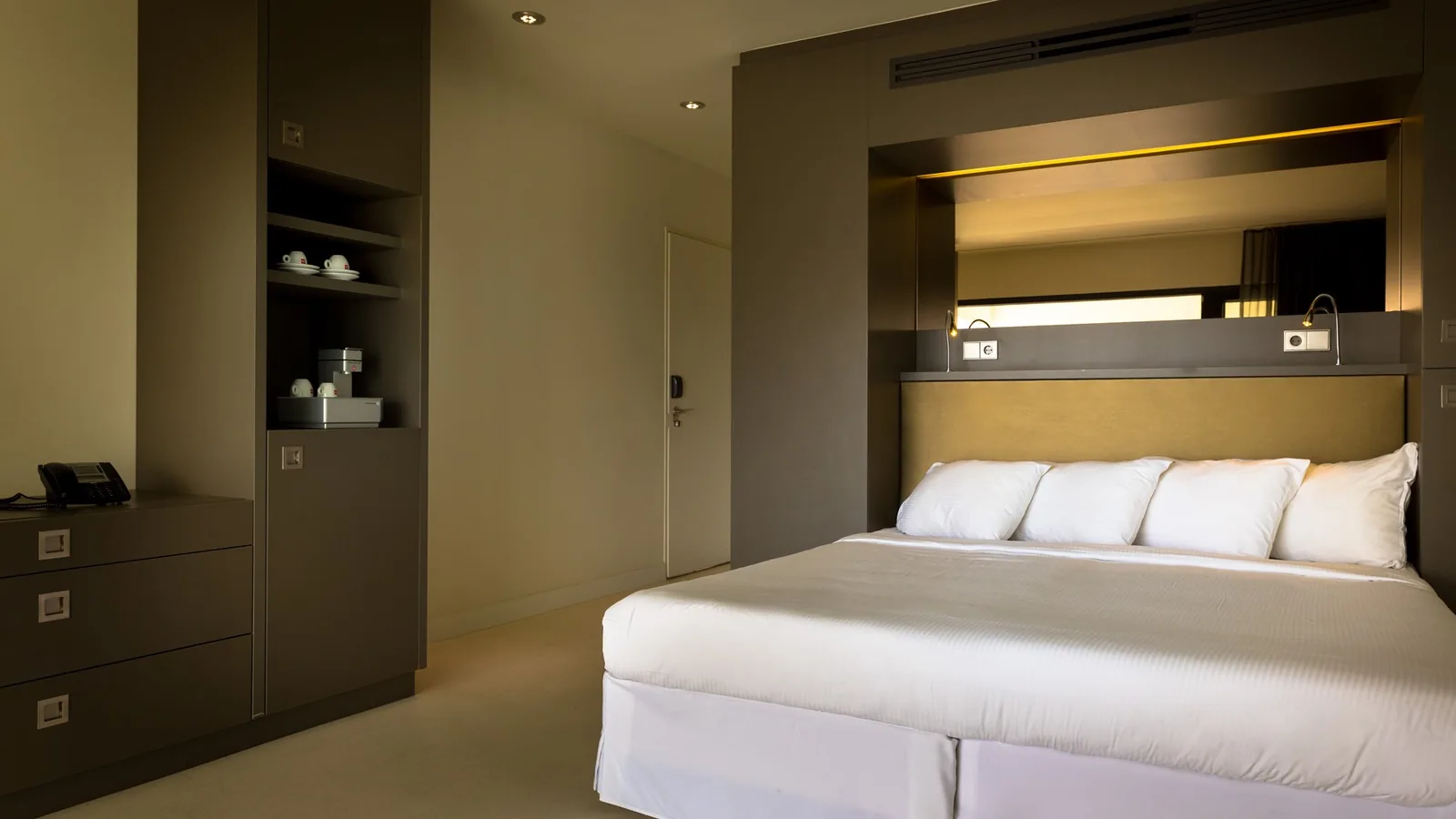
In public buildings the fire class of the floor finish is asked for, and we supply the declarations of performance of the products used with every project. Work is carried out in phases with temporary partitions and low-dust preparation, so the building stays open; with fast-curing systems a room is often back in use within 24 hours.
Discuss a project
Tell us about the location, the environment and the schedule. We answer in English and work internationally.
Start a projectVloersch B.V., Seggeweg 81, 3237 MK Vierpolders, the Netherlands