
Hospitality and commercial kitchens
In a kitchen two requirements pull against each other: the floor must be rough enough to stay safe with fat and water, and smooth enough to get properly clean. We strike that balance per room, so the kitchen is safe and the floor actually comes clean with a normal cleaning round.
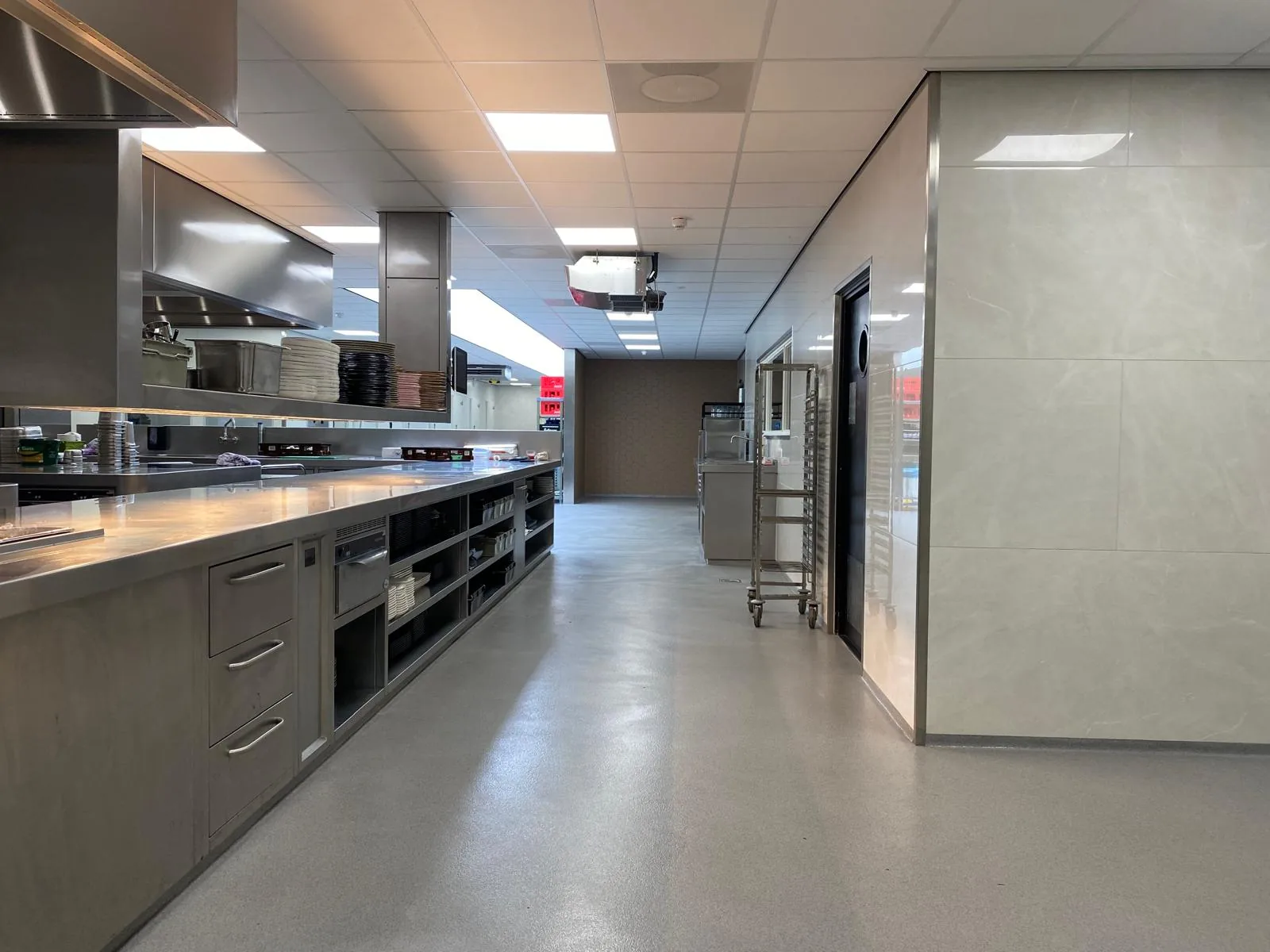
Most accidents in a kitchen are slips, but the roughest floor is not the safest. The coarser the texture, the more fat and protein remain in the profile and the sooner a slippery film forms. A correctly chosen, slightly less coarse floor that actually gets clean is safer in practice. We select the slip class per room together with your cleaning method: a frying area needs something different from a service counter, and a dishwashing area something different again.
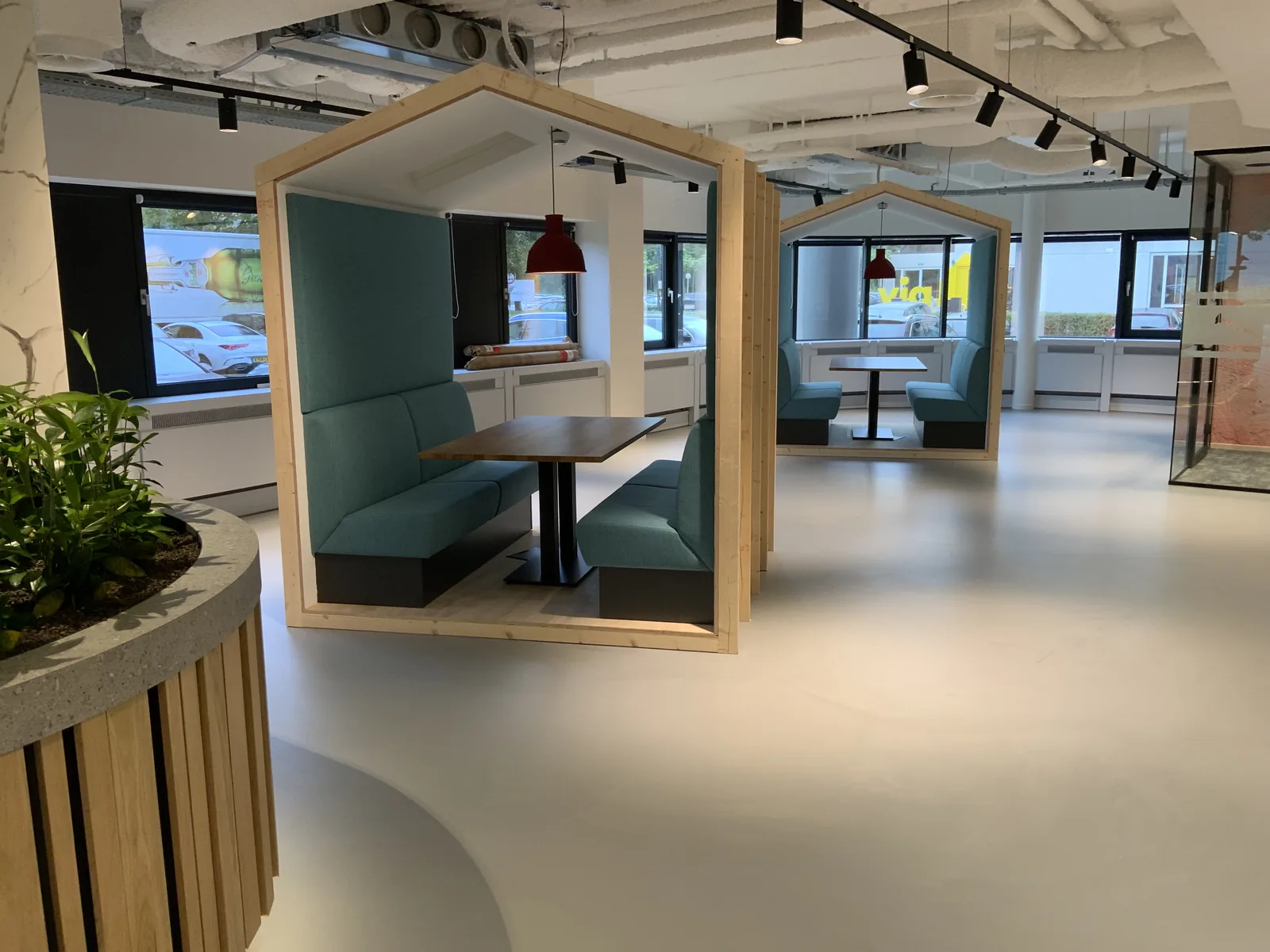
The dishwashing area is the most demanding room in the building. Nowhere does so much hot water reach the floor, and those temperature changes destroy an ordinary resin floor. Here polyurethane cement is the obvious choice, as it expands at roughly the same rate as the concrete beneath it and absorbs the thermal shock, with falls to a gully as standard. Front of house asks the opposite: in the restaurant, bar and hotel lobby the floor must be a tight, seamless surface in the colour that suits the interior, quiet underfoot and without joints. The two systems meet in the doorway, and that transition is finished with a profile.
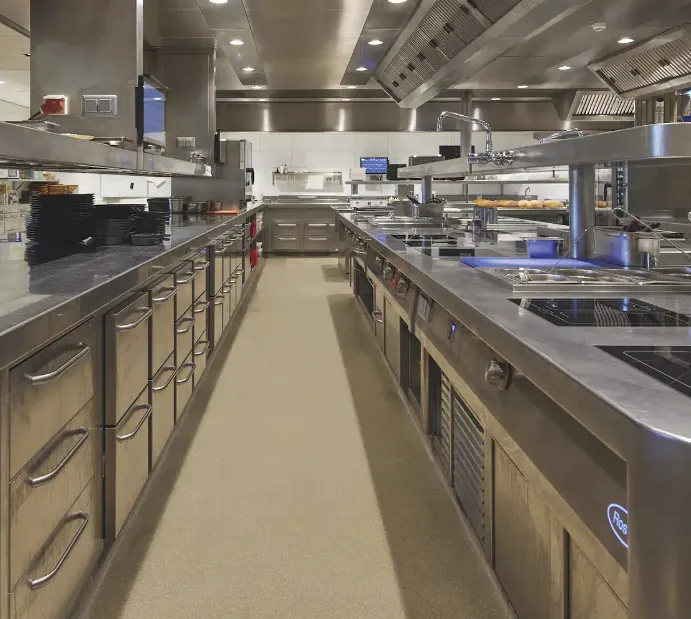
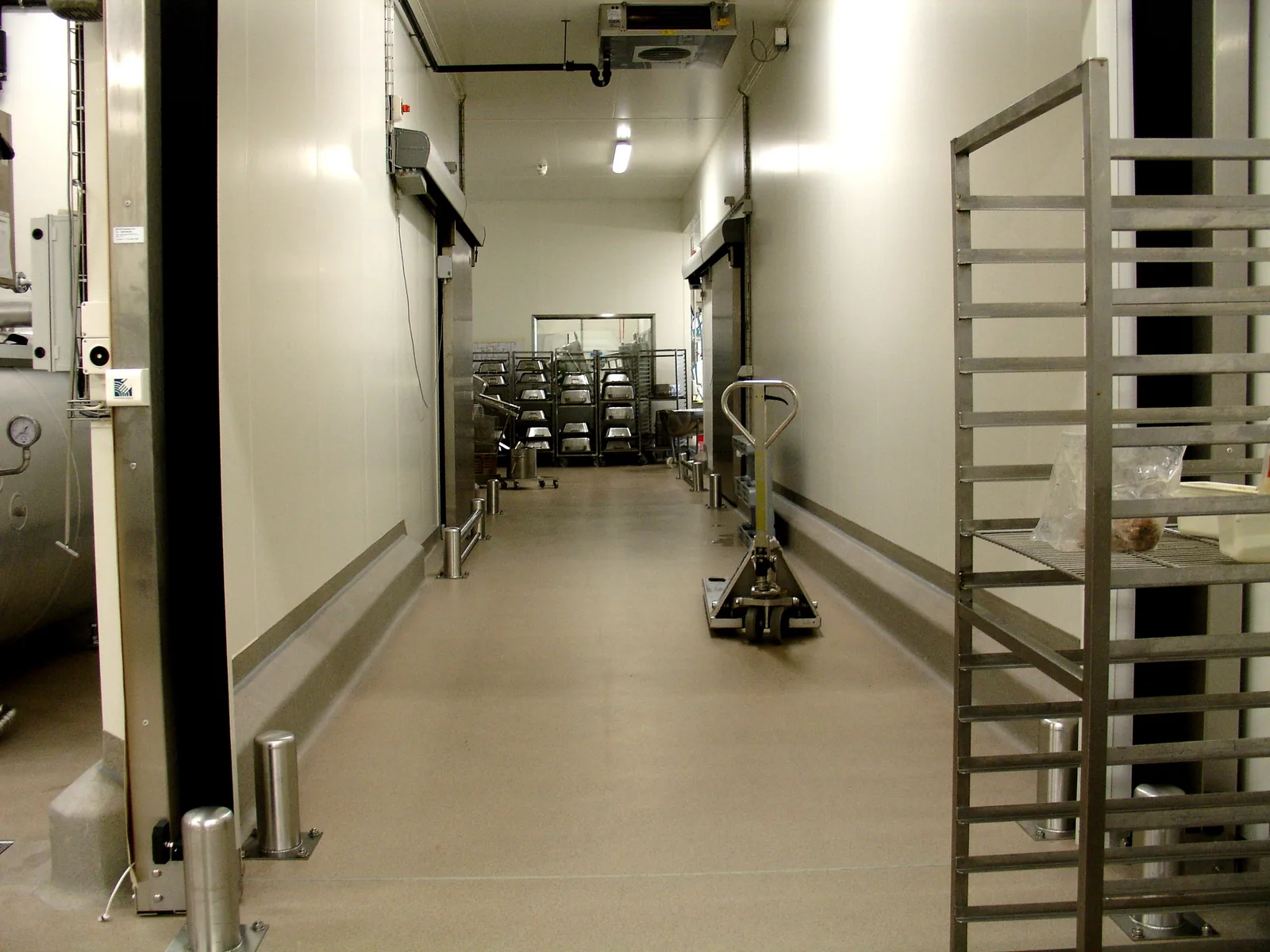
Hygiene comes from a seamless surface, a coved skirting of typically 100 mm with a 20 mm radius, falls to the gully and stainless steel gullies integrated without joints. Fixed equipment, drains and gullies are worked in seamlessly. We plan work on closing days, at night or during a holiday shutdown; with fast-curing systems a room is often back in use within 24 hours.
Discuss a project
Tell us about the location, the environment and the schedule. We answer in English and work internationally.
Start a projectVloersch B.V., Seggeweg 81, 3237 MK Vierpolders, the Netherlands